

Essentially, the representation equates all uses of capital (assets) to all sources of capital, where which of the following correctly expresses the accounting equation? debt capital leads to liabilities and equity capital leads to shareholders’ equity. Mastering equations in accounting is crucial for any accountant or finance professional. They provide the framework for understanding a company’s financial health and ensure that all financial transactions are accurately documented and reported. Accounting equations help ensure the accuracy and integrity of financial data. They also play a significant role in audits and financial reviews, where ensuring the accounts balance is a critical task.

Basic Accounting Equation

The results of accounting equations directly impact the financial statements. The accounting equation is based on the premise that the sum of a company’s assets is equal to its total liabilities and shareholders’ equity. As a core concept in modern accounting, this provides the basis for keeping a company’s books balanced across a given accounting cycle. Solving accounting equations requires understanding the relationship between different components, such as assets, liabilities, and equity. Using these equations correctly helps in preparing financial statements like balance sheets and income statements. The accounting equation plays a significant role as the foundation of the double-entry bookkeeping system.
Income and retained earnings
- The major and often largest value assets of most companies are that company’s machinery, buildings, and property.
- It is used to transfer totals from books of prime entry into the nominal ledger.
- Understanding accounting equations is also key to applying accounting principles such as consistency, conservatism, and accrual basis accounting.
- Think of retained earnings as savings, since it represents the total profits that have been saved and put aside (or “retained”) for future use.
- This statement reflects profits and losses that are themselves determined by the calculations that make up the basic accounting equation.
- Debt is a liability, whether it is a long-term loan or a bill that is due to be paid.
The https://www.bookstime.com/ global adherence to the double-entry accounting system makes the account-keeping and -tallying processes more standardized and foolproof. Debt is a liability, whether it is a long-term loan or a bill that is due to be paid. Accounts receivable list the amounts of money owed to the company by its customers for the sale of its products.
- This straightforward relationship between assets, liabilities, and equity is considered to be the foundation of the double-entry accounting system.
- Using these equations correctly helps in preparing financial statements like balance sheets and income statements.
- If it’s financed through debt, it’ll show as a liability, but if it’s financed through issuing equity shares to investors, it’ll show in shareholders’ equity.
- Since the balance sheet is founded on the principles of the accounting equation, this equation can also be said to be responsible for estimating the net worth of an entire company.
- Accounting equations help ensure the accuracy and integrity of financial data.
Shareholders’ Equity
- For instance, if a business takes a loan from a bank, the borrowed money will be reflected in its balance sheet as both an increase in the company’s assets and an increase in its loan liability.
- Often, a company may depreciate capital assets in 5–7 years, meaning that the assets will show on the books as less than their “real” value, or what they would be worth on the secondary market.
- Equations in accounting are essential tools for managing financial data and ensuring that all accounts balance correctly.
- These are some simple examples, but even the most complicated transactions can be recorded in a similar way.
- The results of accounting equations directly impact the financial statements.
Since the balance sheet is founded on the principles of the accounting equation, this equation can also be said to be responsible for estimating the net worth of an entire company. The fundamental components of the accounting equation include the calculation of both company holdings and company debts; thus, it allows owners to gauge the total value of a firm’s assets. The fundamental accounting equation, also called the balance sheet equation, is the foundation for the double-entry bookkeeping system and the cornerstone of accounting science. In the accounting equation, every transaction will have a debit and credit entry, and the total debits (left side) will equal the total credits (right side).

The accounting equation is a concise expression of the complex, expanded, and multi-item display of a balance sheet. This number is the sum of total earnings that were not paid to shareholders as dividends. Think of retained earnings as savings, since it represents the total profits that have been saved and put aside (or “retained”) for future use. The accounting equation is fundamental to the double-entry bookkeeping practice. The major and often largest value assets of most companies are that company’s machinery, buildings, and property. Assets include retained earnings cash and cash equivalents or liquid assets, which may include Treasury bills and certificates of deposit (CDs).
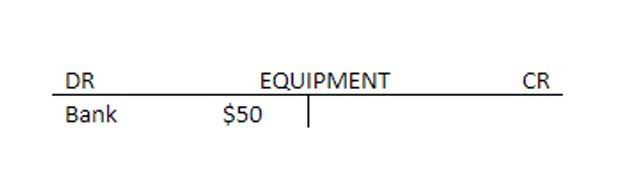
However, due to the fact that accounting is kept on a historical basis, the equity is typically not the net worth of the organization. Often, a company may depreciate capital assets in 5–7 years, meaning that the assets will show on the books as less than their “real” value, or what they would be worth on the secondary market. These are some simple examples, but even the most complicated transactions can be recorded in a similar way. It can be defined as the total number of dollars that a company would have left if it liquidated all of its assets and paid off all of its liabilities. The accounting equation is also called the basic accounting equation or the balance sheet equation.